
Table of Contents
ToggleIn a world where buildings reach for the stars, space frame technology is the unsung hero holding it all together—literally. Imagine a structure so strong yet so lightweight, it makes your favorite superhero look like a featherweight. This innovative design isn’t just about aesthetics; it’s about redefining how we think about architecture and engineering.
Overview of Space Frame Technology
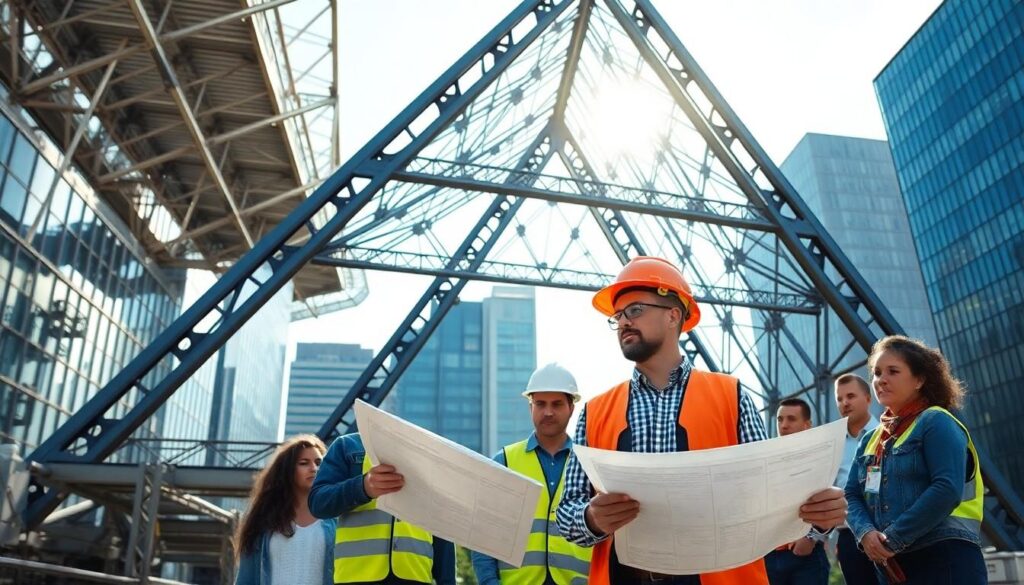
Space frame technology incorporates interconnected elements arranged in a three-dimensional framework. Designers frequently utilize triangular components to create a structure that distributes loads evenly. This arrangement enhances stability while minimizing material usage. Engineers favor space frames for their ability to span large distances without the need for intermediate supports.
Applications of space frames are widespread, including in sports arenas, exhibition halls, and airport terminals. Such versatility makes them suitable for various architectural styles. Innovative materials like steel and aluminum contribute to their strength and durability, allowing them to withstand environmental pressures.
Structural efficiency characterizes space frame systems, enabling their adoption in high-rise buildings. As a lightweight solution, this technology retains remarkable load-bearing capabilities. The modular nature of space frames allows for easy assembly and disassembly, providing flexibility in design modifications.
Cost savings often accompany space frame designs due to reduced material usage and efficient labor requirements. Engineers increasingly turn to computer-aided design software to optimize the performance of space frames, predicting how forces interact within the structure. Increasing awareness of sustainability highlights the potential for space frames to use recycled materials, promoting environmentally friendly construction practices.
Space frame technology stands out as an innovative approach that revolutionizes traditional building methods. It combines architectural aesthetics with functional efficiency, making it essential for modern engineering projects.
Benefits of Space Frame Technology
Space frame technology offers numerous advantages that enhance modern architectural design and construction efficiency. One key benefit lies in its ability to provide significant structural integrity.
Structural Integrity
Space frames distribute load evenly through interconnected members, resulting in exceptional stability even under heavy loads or adverse weather conditions. Engineers design structures that withstand forces like wind and seismic activity, ensuring longevity and safety. The inherent triangular shape of each element maximizes strength while minimizing material requirements. Through this configuration, space frames achieve impressive load-bearing capabilities, outperforming traditional construction methods. The lightweight nature further supports tall buildings without compromising durability, making it a popular choice for architects and engineers.
Design Flexibility
The modular nature of space frames allows for remarkable design flexibility, empowering architects to explore innovative forms. Designers create unique aesthetics that break away from conventional designs while maintaining functionality. Additionally, its easy assembly and disassembly facilitate alterations during the construction phase. Space frames adapt to various applications, such as exhibition halls or sports arenas, enhancing versatility in architectural projects. This adaptability encourages sustainable design practices, enabling the use of recycled materials and efficient construction methods. Overall, space frame technology fosters creativity in architectural expression and practical design solutions.
Applications of Space Frame Technology
Space frame technology finds extensive use in various industries due to its unique properties. Its lightweight structure and strength make it ideal for innovative designs.
Architectural Structures
Space frames enhance architectural structures by providing a robust, versatile framework. Sports arenas leverage this technology to create large, unobstructed interiors. Exhibition halls also benefit, allowing for dynamic layouts that can easily accommodate varying installations. Airport terminals utilize space frames for spacious, airy designs, enhancing passenger experience. These frameworks enable architects to explore unique geometric forms while maintaining structural integrity. Stability remains paramount, as space frames evenly distribute loads through interconnected elements.
Automotive Industry
In the automotive industry, space frame technology improves vehicle design, emphasizing safety and efficiency. The lightweight frames enhance fuel efficiency by reducing overall vehicle weight. Manufacturers integrate space frames into performance vehicles to increase rigidity without adding substantial mass. Often found in supercars, this design approach allows for faster, more responsive handling. Durability is another benefit, as space frames withstand impact forces better than traditional structures. Engineers continue to adopt this technology for innovative suspension systems, improving ride comfort and handling.
Aerospace Development
Aerospace development greatly benefits from space frame technology, particularly in crafting lightweight structures. Aircraft designers utilize these frames to achieve optimal strength-to-weight ratios, enhancing fuel efficiency. Space frames support aerodynamic shapes while ensuring structural stability during flight. The modular nature of space frames facilitates easy assembly and maintenance of aircraft components. Additionally, their resilience to extreme conditions plays a crucial role in aerospace applications. Research continues into incorporating advanced materials, promoting further innovations in the aerospace field.
Challenges in Space Frame Technology
Space frame technology, while innovative, faces several challenges that impact its adoption and implementation. These challenges include manufacturing limitations and cost considerations.
Manufacturing Limitations
Manufacturing space frames involves complexities that can hinder production efficiency. Unique geometries often increase the difficulty in standardizing components. Additionally, precise fabrication is crucial to achieve structural integrity, requiring advanced machinery and skilled labor. Availability of specialized tools can sometimes be an obstacle for smaller manufacturers. Moreover, even minor discrepancies during production can lead to significant performance issues, necessitating rigorous quality control processes.
Cost Considerations
Cost plays a significant role in the adoption of space frame technology. Initial investment costs can be higher due to advanced materials and manufacturing requirements. While space frames might lead to long-term savings through reduced material use, upfront expenses often deter some projects. Budget constraints may limit the scale and complexity of designs achievable with space frames. Additionally, increased labor requirements for assembly or installation can further inflate overall project costs. Effective planning and effective risk assessments can help mitigate these financial challenges.
Future Trends in Space Frame Technology
Space frame technology continues to evolve, reflecting advancements in materials and design methodologies. Enhanced computational design tools enable engineers to explore complex geometries, resulting in more efficient and aesthetically impactful structures. Applications in sustainable design are gaining prominence, with a rising inclination towards using recycled materials.
Significantly, the integration of smart technology is reshaping space frame systems. Sensors embedded within frames allow for real-time monitoring, ensuring optimal performance and safety. A focus on modular construction is becoming essential, promoting quicker assembly and disassembly processes to meet the demands of fast-paced projects.
Collaboration between architects and engineers fosters innovation in design, integrating traditional principles with modern technologies. Enhanced manufacturing techniques also streamline production, simplifying the crafting of intricate components for customized solutions.
Growing environmental concerns prompt the industry to prioritize sustainability in space frame applications. Renewable energy integration, such as solar panels within frameworks, exemplifies this trend. Additionally, urbanization drives a demand for taller and more efficient building solutions, highlighting the importance of space frames in dense city environments.
Investment in research and development is essential as the industry seeks to overcome existing challenges. Exploring alternative materials can reduce costs and manufacturing complexities. Continuous refinement of techniques will lead to broader adoption across architecture and engineering sectors, ensuring the technology remains relevant and effective.
With these trends, space frame technology is poised to transform both architectural aesthetics and structural capabilities, promising a future enriched by creativity and efficiency.
Space frame technology stands at the forefront of modern architecture and engineering. Its unique ability to combine strength with lightweight design makes it an invaluable asset for creating innovative structures. As urbanization continues to rise the demand for efficient and sustainable building methods grows.
Embracing space frame systems not only enhances design flexibility but also promotes environmental responsibility through the use of recycled materials. The integration of advanced computational tools and smart technologies further positions space frames as a critical solution for future construction challenges.
With ongoing research and development efforts aimed at overcoming existing manufacturing hurdles, space frame technology is set to redefine the landscape of architectural possibilities. The future holds immense potential for this versatile framework to shape our built environment in ways we have yet to imagine.


